
Power and data access is a given in almost every commercial and high-end residential scheme. What separates a well-specified interior from an average one is whether that access is visible. The floor box lid, the part of the floor box that sits flush with the finished floor, is usually the only part anyone ever sees. Get it wrong and it becomes the one detail that undermines an otherwise carefully considered space. Get it right and nobody notices it at all, which is exactly the point.
We’ve put together this guide to help architects and interior designers specify floor box lids with confidence, and avoid the mismatched finishes, awkward junctions, and flush-fit problems that crop up when the lid is treated as an afterthought rather than part of the design.
What is a floor box lid?
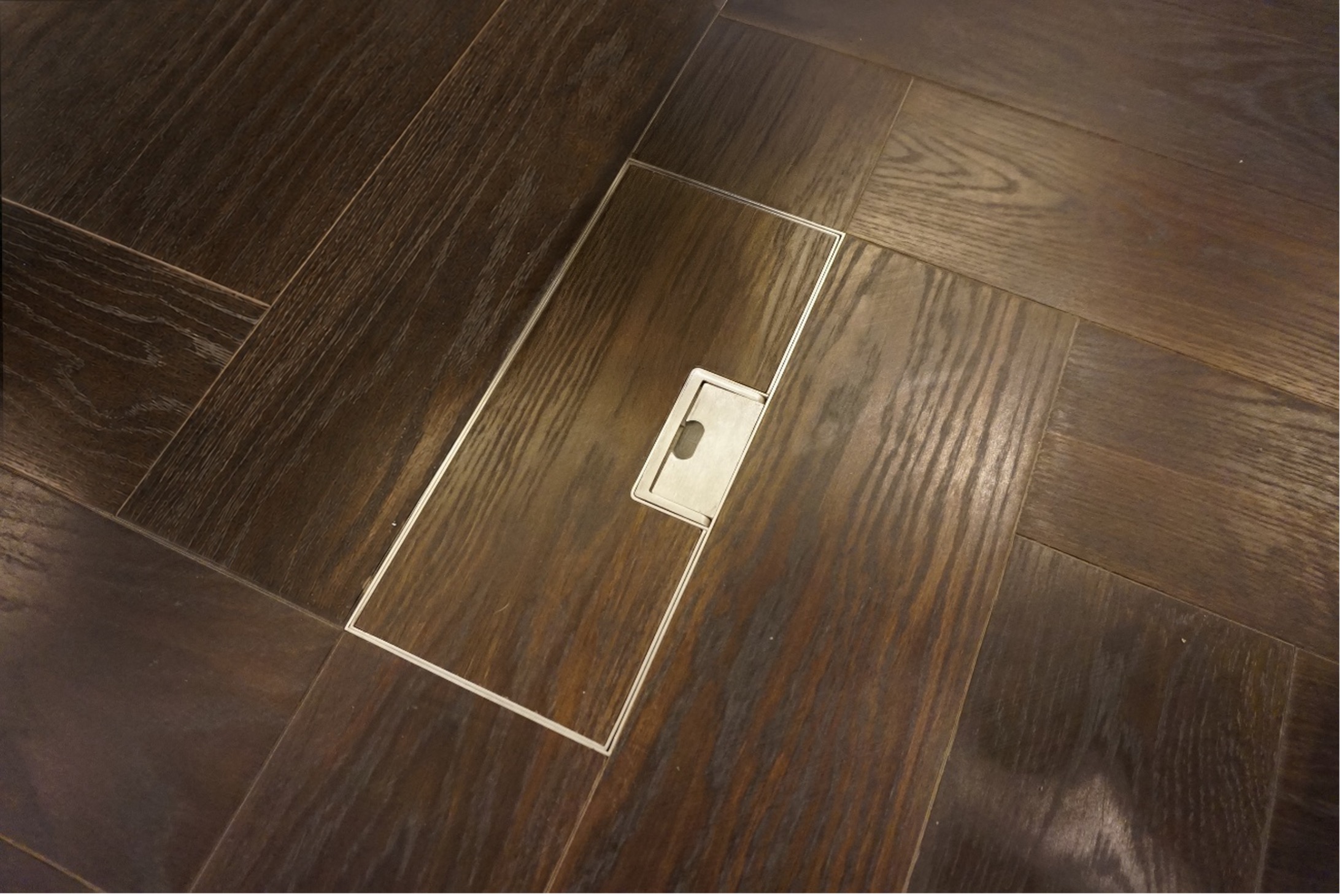
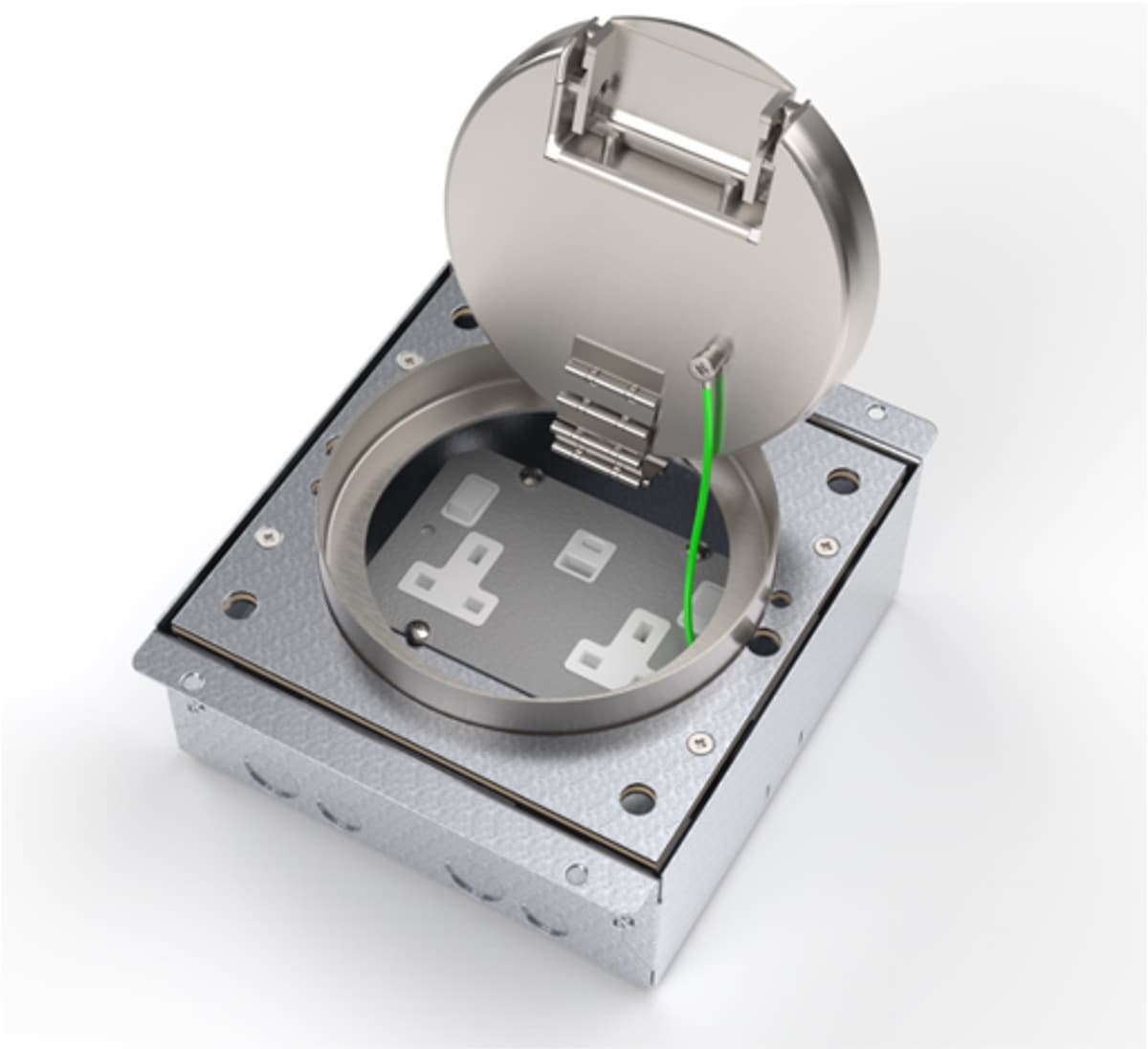
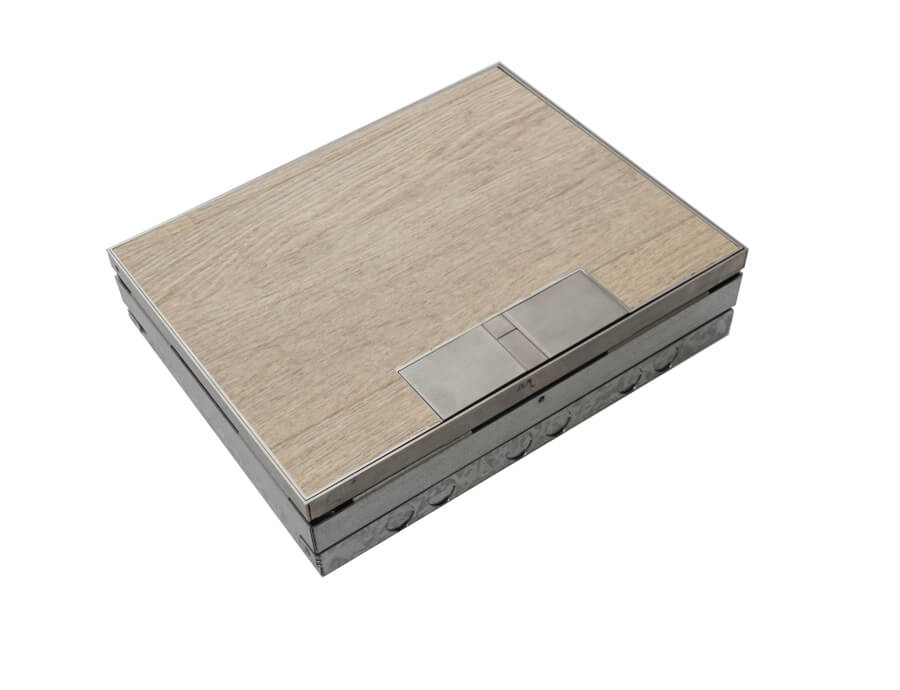
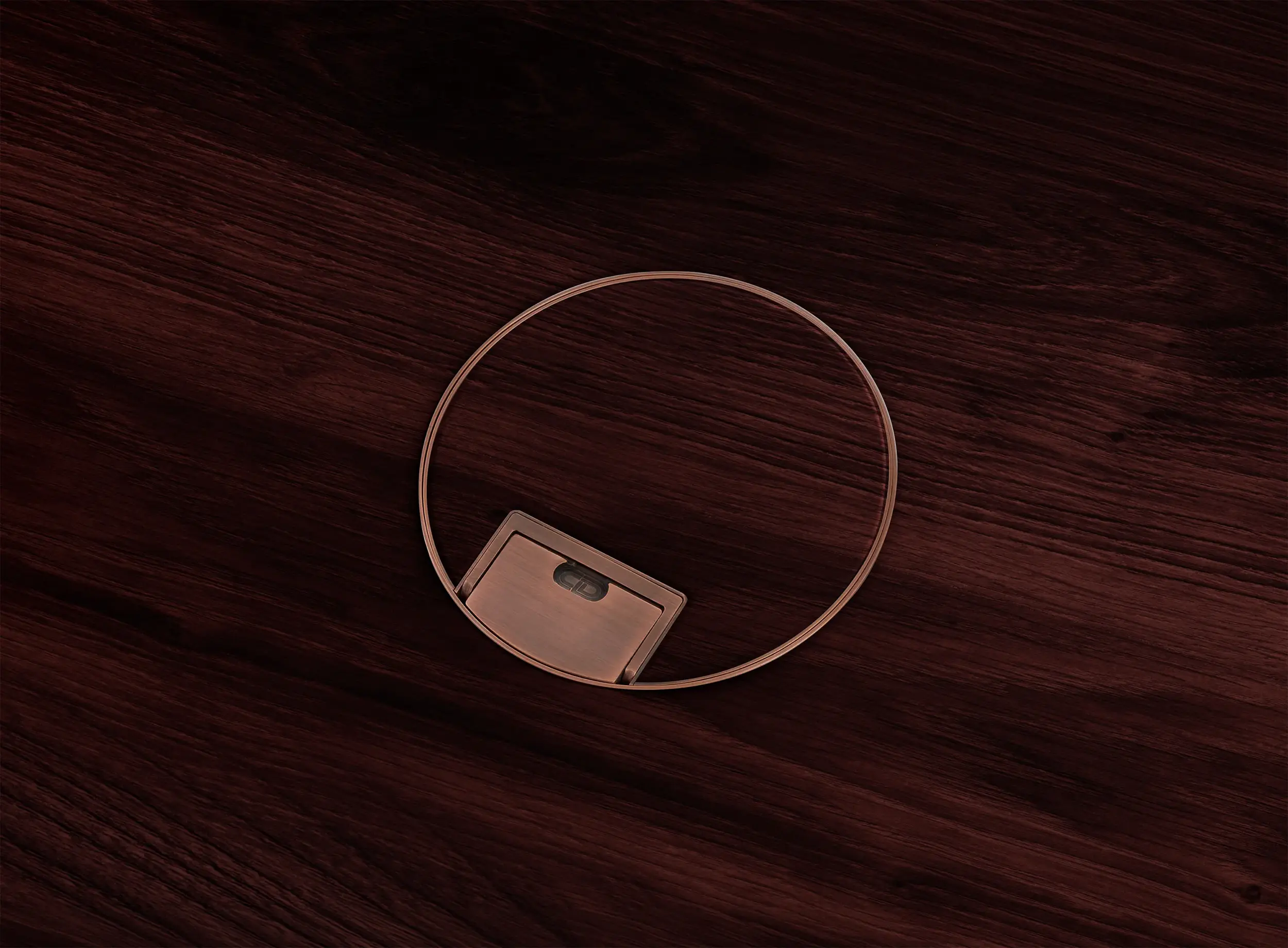
A floor box lid is the top face of a recessed floor box. It sits within the frame of the box, level with the surrounding floor, and lifts or hinges open to reveal the sockets, data points, or AV connections underneath. Once closed, it’s the only visible part of the entire assembly. Everything else, the base box, the wiring, the outlet plates, sits below floor level, out of sight.
Because it’s the only part on show, the lid carries all the design responsibility. Specify it well and it reads as a natural extension of the floor. Specify it as an afterthought and it reads as a metal patch dropped into an otherwise continuous surface.
Why floor box lids deserve early attention
A lid looks like a small component on a drawing. In reality, it’s one of the few points in a scheme where building services and interior finish meet in full view of the end user, which is exactly why it’s worth getting right at specification stage rather than leaving to the electrical contractor to sort out on site.
- Visual continuity. In stone, timber, or terrazzo floors especially, any break in pattern or material draws the eye. A lid that hasn’t been considered against the flooring plan will always look bolted on.
- Client and end-user perception. In hospitality, retail, and high-end residential projects, the small details are the ones people notice. A scuffed or mismatched lid in a boardroom or hotel lobby undercuts the quality signal the rest of the space is working hard to send.
- Long-term durability. Lids get walked on, rolled over with furniture, and opened and closed constantly. A lid chosen purely for looks, without checking load rating or mechanism quality, will let a project down long before the rest of the floor build-up does.
- Coordination risk. The designer specifies the lid; the electrical contractor installs it, usually from a different set of drawings. Ambiguity at specification stage is where most on-site mismatches start.
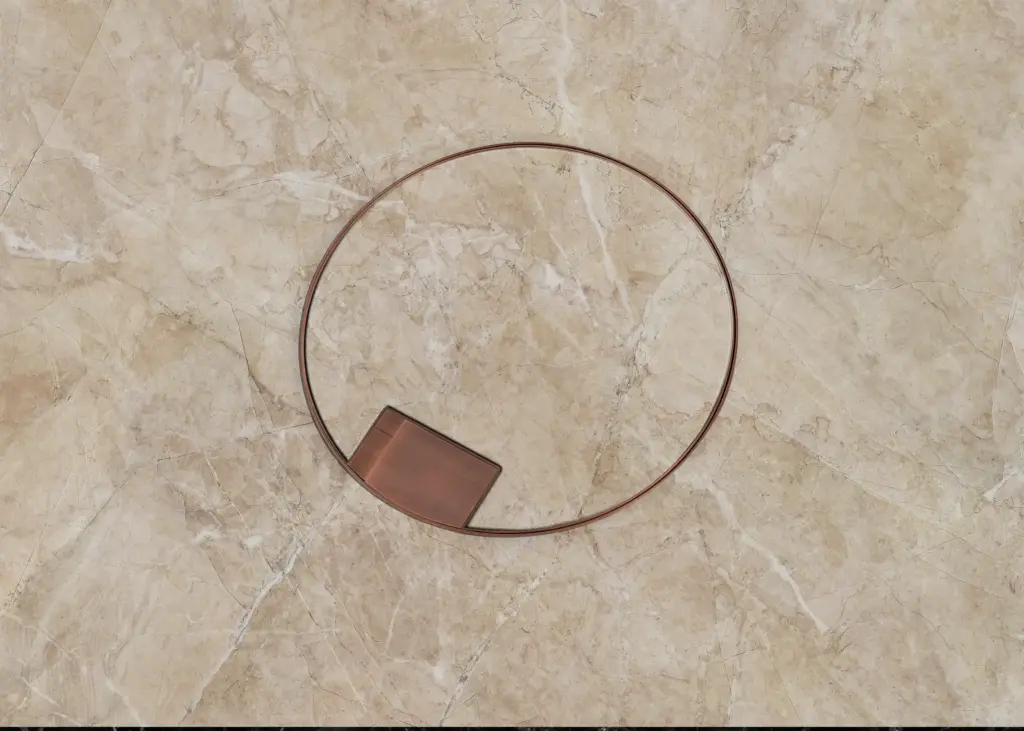
Specifying floor box lids: what to check before you commit
1. Match the lid to the flooring material
The single biggest factor in how discreet a lid looks is how well it relates to the floor finish around it. We’d point to two broad approaches:
- Solid metal lids, (also known as flat lids), finished in a material that complements rather than matches, such as Satin Brass against timber, or Satin Stainless Steel against polished concrete or terrazzo.
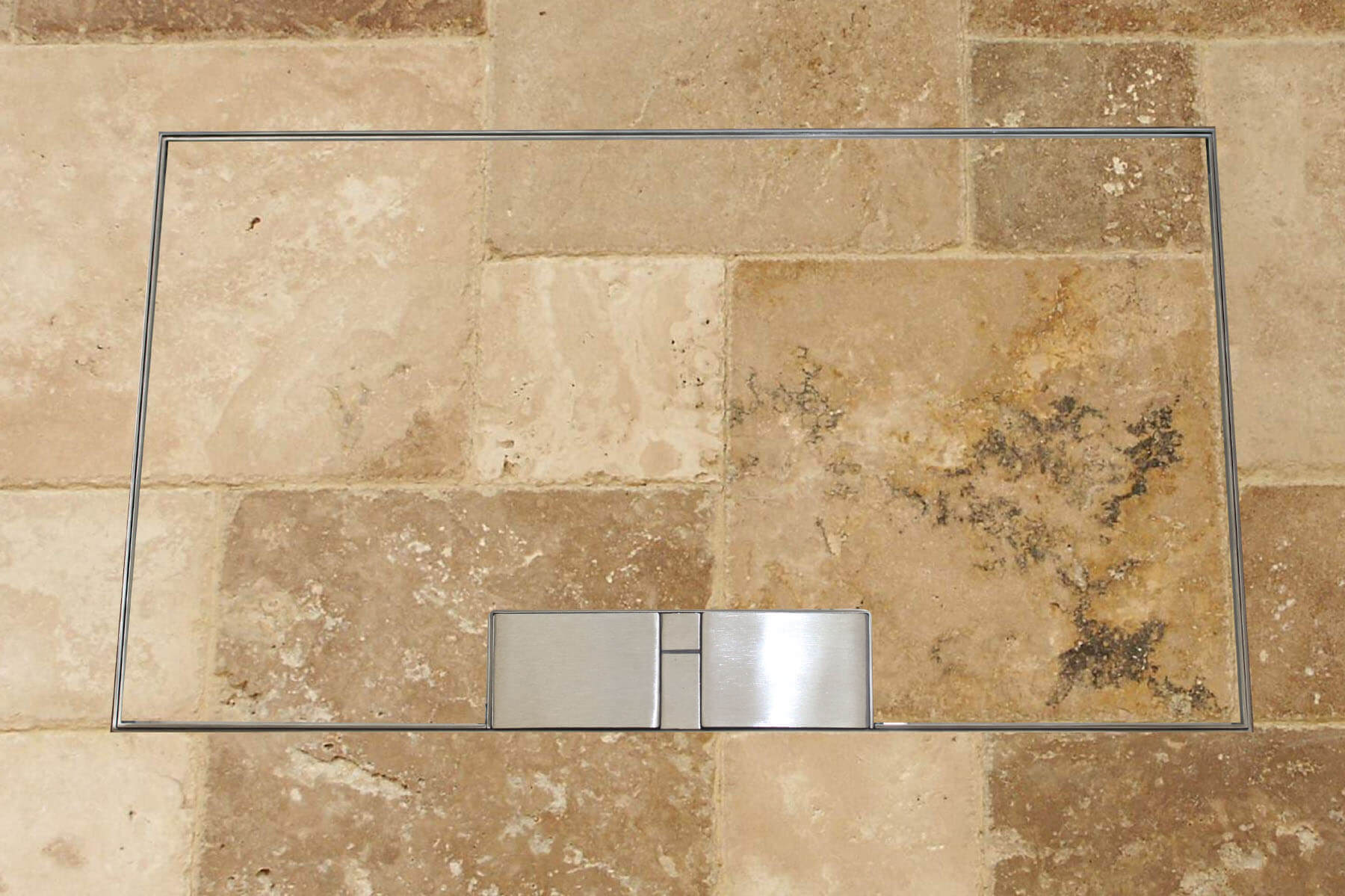
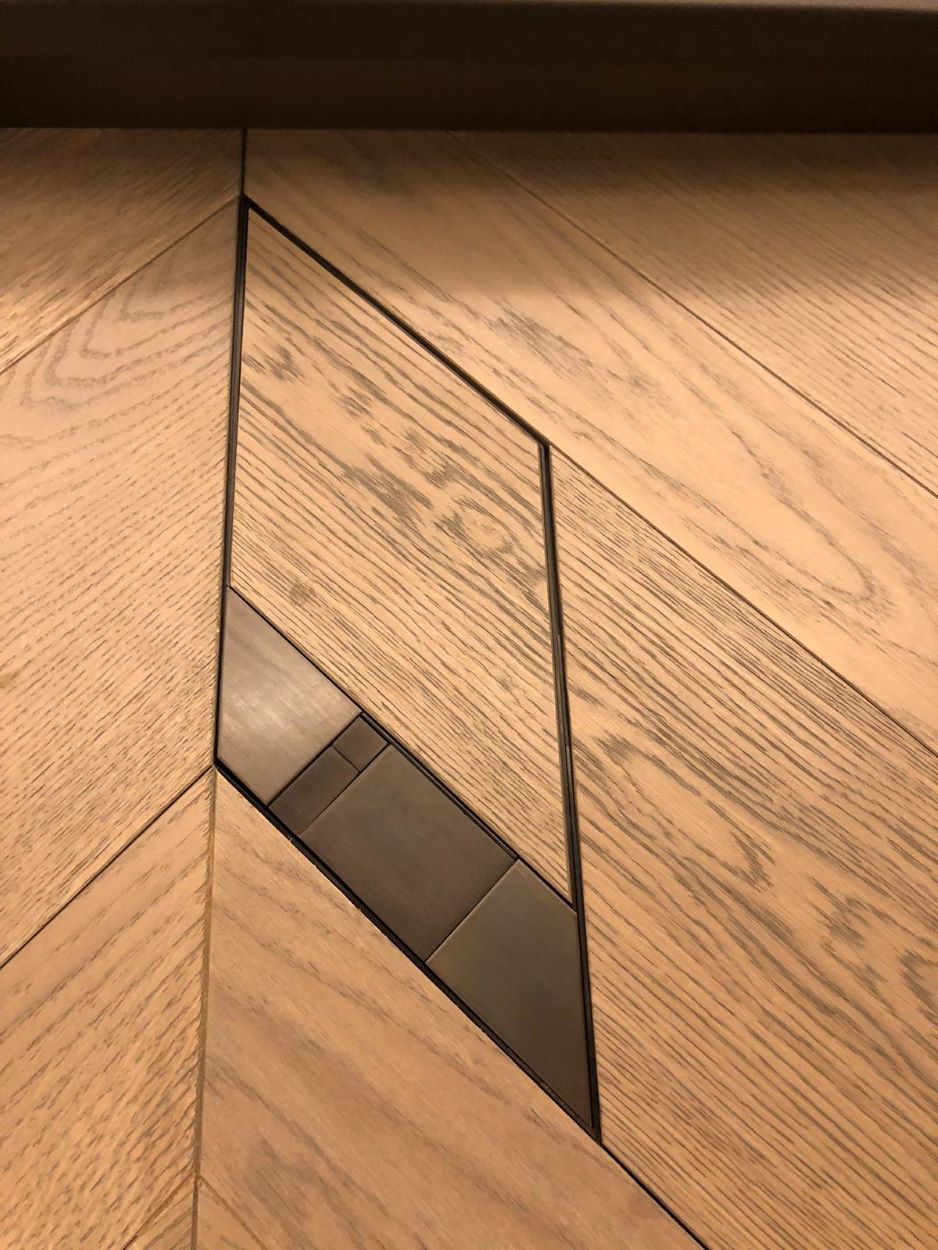
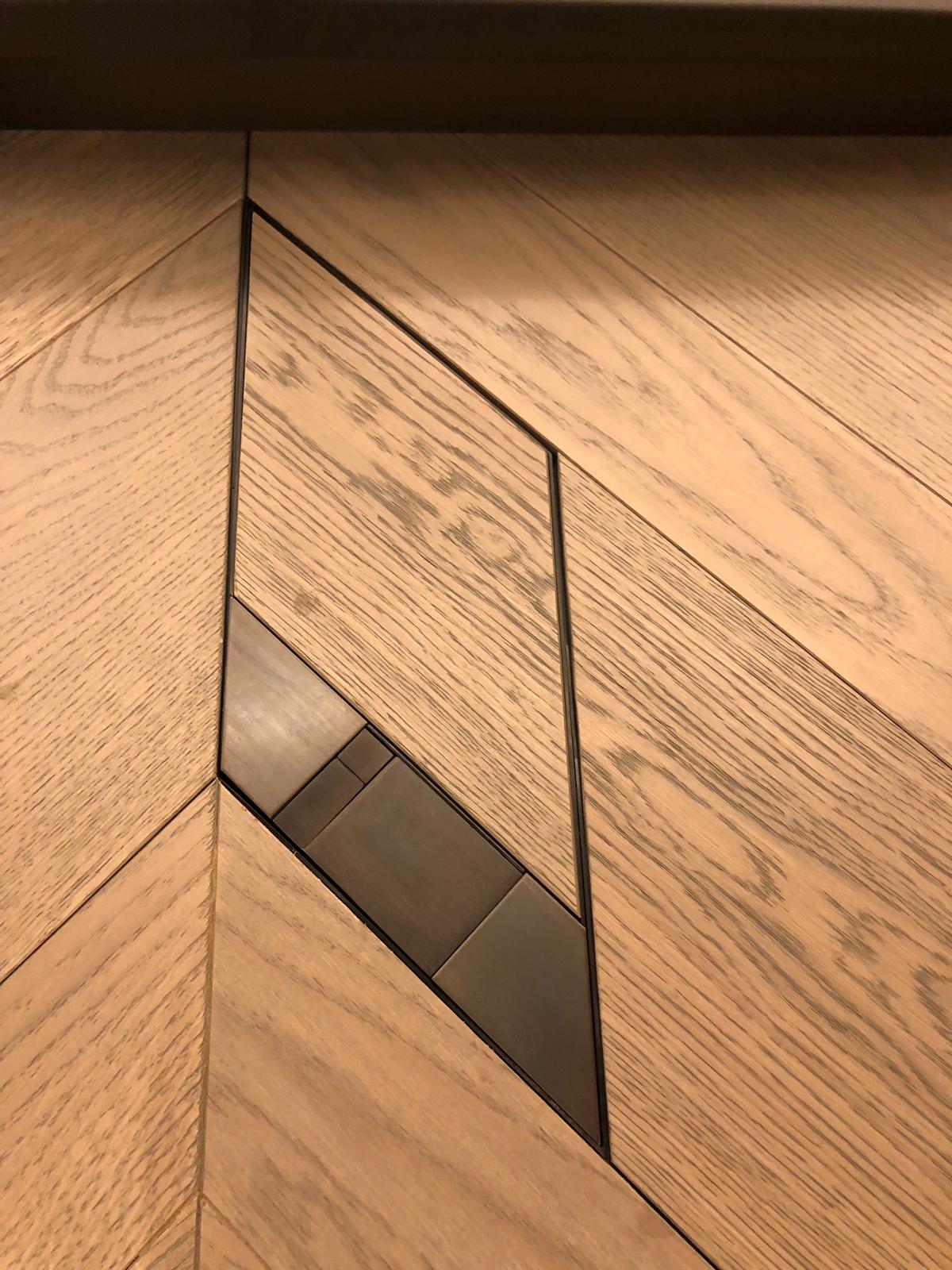
- Recessed inset lids, (also known as recessed lids and recessed floor box lids), where the floor covering itself is cut and inset into the lid, so it all but disappears into the floor pattern. This is the most seamless option, and the one most worth specifying early since it needs coordination with the flooring contractor. Cableduct’s DISCREET lids can be customised to the exact thickness of the floor covering, from 3mm to 30mm, leaving as little as 10% of the lid’s metal visible once fitted.
2. Get the finish right, not just the colour
Metal finish affects how a lid reads under different lighting and footfall conditions, not just its base colour:
- Satin brushed finishes (Stainless Steel or Brass) resist fingerprints and scuffing better than polished options, making them a sensible default for high-traffic areas.
- Mirror-polished finishes look striking in photography and low-traffic settings such as boardrooms or private residences, but they show marks quickly underfoot and are best kept out of circulation routes.
- Living or bronzed finishes, such as Antique Brass or Antique Bronze, age and patinate over time. This is a deliberate design choice for heritage or period schemes, and worth flagging to clients early so the ageing process is expected rather than mistaken for wear.
3. Specify for the mechanism, not just the surface
A lid’s finish only stays intact if the mechanism underneath is right. Worth checking:
- Hinged versus lift-out lids. Hinged lids are generally preferred in commercial settings, since there’s no loose part to mislay.
- Load rating. A lid specified for a quiet office corner won’t necessarily cope with a retail floor or an area where furniture is regularly rolled across. Confirm load rating against actual anticipated use, not just the room type on the drawing.
- Depth of build-up. Floor construction depth on site (typically 55mm to 120mm) determines which floor box and lid combination is even feasible. Worth checking with the manufacturer before the finish is finalised, since some finishes and inset options need additional depth.
4. Co-ordinate early with the flooring contractor
Recessed inset lids in particular need the floor covering supplier and the floor box manufacturer working from the same information. Confirm early:
- The exact floor covering thickness, so the inset recess is cut to the correct depth
- Whether the flooring pattern (parquet, tile grid, carpet plank direction) needs to run through or around the lid
- Who is responsible for the final cut and fit, since this is a common point where responsibility falls between trades
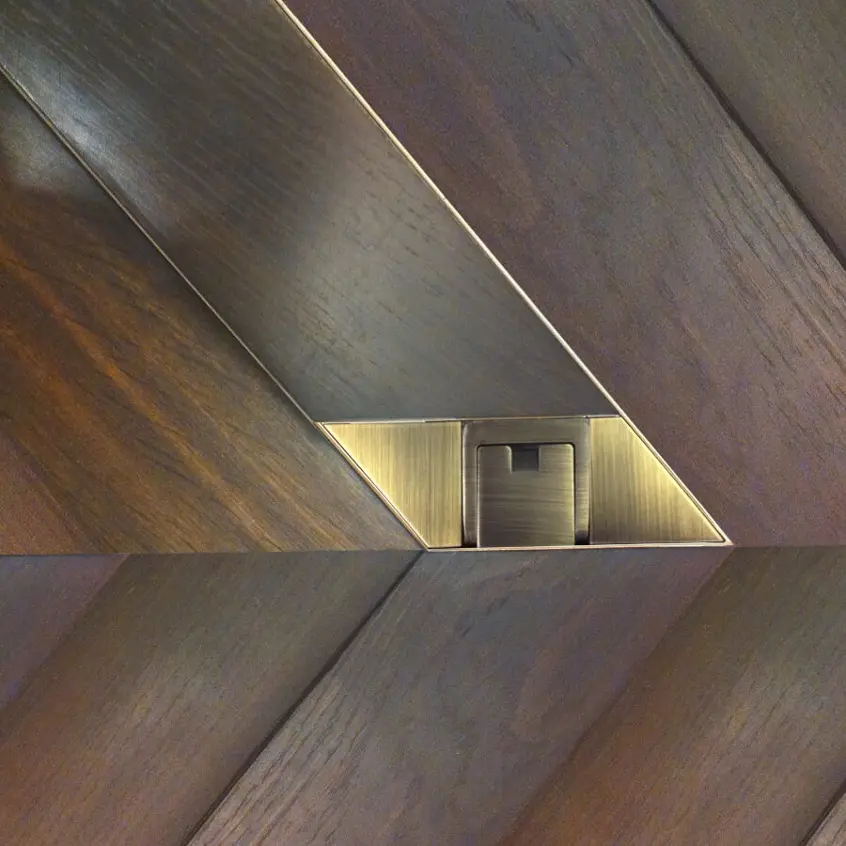
Solid lids vs recessed inset lids: a quick comparison
| Consideration | Solid metal lid | Recessed inset lid |
| Visual result | Visible metal frame, finish selected to complement flooring | Floor covering inset into lid, near-invisible junction |
| Best suited to | Hard flooring: stone, timber, polished concrete, and where higher loads are expected | Carpet, timber, and tile floors where pattern continuity matters |
| Coordination required | Standard, finish confirmed at order stage | Higher, needs floor covering sample and thickness confirmed with flooring contractor |
| Typical use case | Offices, retail, showrooms | Hospitality, heritage buildings, high-end residential |
| Maintenance | Wipe clean, some finishes patinate over time | Maintained as part of the floor covering itself |
A note on retrofit projects and retrofit floor boxes
Not every specification is new build. Where floor boxes are going into an existing floor, such as an office refurbishment or a heritage building refit, available depth and existing floor construction will often dictate lid options more than the aesthetic brief does. It’s worth involving the floor box manufacturer at concept stage on retrofit projects, rather than after the lid’s already been chosen from a brochure, since not every finish and inset option suits every retrofit depth.
It is also fair to say that not all projects go exactly to plan and timings and trades can fall out of synchronisation. When this happens, project managers need flexibility and help from suppliers and retrofit assembly floor boxes provide this as they can be fitted after a new floor covering has been laid.
Getting the detail right from the outset
A floor box lid is one of the few pieces of building services that a client, tenant, or hotel guest will actually touch and look at directly. Specifying it properly, matched to the floor finish, correctly rated for footfall, and coordinated with the flooring trade, is a small part of the overall project but a disproportionately visible one.
We manufacture our floor boxes and lids here in the UK, with a full range of ELEGANT finishes, DISCREET lid options, and TAILORED shapes for bespoke projects. If you’re specifying floor boxes for an upcoming project and want to talk through lid options against your flooring plan, get in touch today. Call us on 020 8683 1126 or send us a message online and we’ll get back to you as quickly as possible.